March 2026
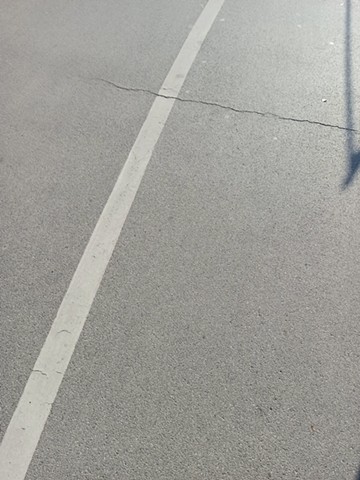
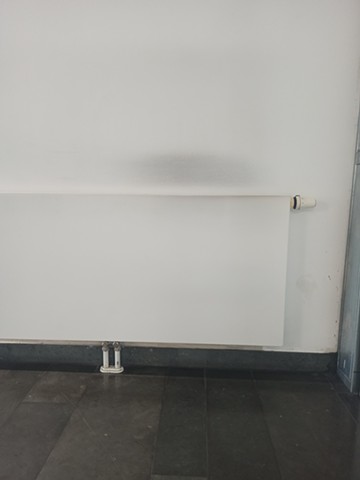
These photographs were taken in March 2026 in Vienna, with a Xiaomi Redmi Note 8 Pro from 2019, straight out of camera.
I photograph what stops me — though I don't think it stops only me. These are not private discoveries. They are visual readymades: stereotypes and banalities that already circulate, already belong to everyone, already carry more meaning than they appear to hold. The already-seen, recorded again.
I do not reframe. I do not reposition. In thirty years of photography — including as a professional in Israel — I have known that the first shot is the true one. The adjustment ruins it. The Einstellung — the shot, the attitude, the political position — is what I already am before I raise the phone.
Vienna, 2026. A comfortable city. Surveillance cameras in empty rooms, cables on desks, finished coffee. Capitalism and its objects, persisting. The world — war, disaster, the screen's emergencies — does not interrupt this. It arrives through the same device that took the photograph, in the same room, on the same surface. Everything collapses here: the duvet and world war, the domestic and the desolate, horror and the ordinary morning. It does not interrupt because there is no longer an outside from which it could arrive. It was already here, already ambient, already part of the furniture.
This work costs almost nothing to make and should cost almost nothing to own. The equipment is obsolete, the paper is ordinary, the format is a zine. This is not modesty. It is a position. Anybody can do this. The question is what you look at and whether you stop.
The underlying question is one I have been asking since my doctoral research at the University of Paris 8, on the films of Straub-Huillet: what does it mean to treat attention as a political act, the image as material resistance? That remains the question.
A 2019 sensor in 2026. The grain is not a style. It is what the instrument actually sees.
Why March 2026? Because on those two days, in Vienna, the world looked like this.


